Features
Privacy and security
Files are encrypted on your device before they go anywhere, with keys that never leave it. What is left on the server is blocks of ciphertext and very little else.
| What a server can see | Peergos | A typical cloud drive |
|---|---|---|
| What is in your files | Hidden | Readable by the server |
| What your files are called | Hidden | Readable |
| How big they are | Hidden | Readable |
| How your folders are arranged | Hidden | Readable |
| Who you share with | Hidden | Readable |
| Who your contacts are | Hidden | Readable |
Encrypted before it leaves your device
Your keys are derived from your password on your own machine and are never sent to us. A Peergos server holds no key that can read your files. How the encryption works.
Metadata is protected too
File names, sizes, folder structure, modification times and file types are not visible to the server, and without the key a directory is indistinguishable from a small file. Your contact list is stored encrypted in your own space, so the server cannot see who you know, and when you share a file with someone the server cannot tell that you did. How the metadata protection works.
Two factor authentication
Log in with an authenticator app or a security key. Peergos speaks WebAuthn and CTAP2 directly, so hardware keys work in the desktop apps as well as the browser, including Windows Hello and keys like the Nitrokey that use self attestation. Single use backup codes cover the day the key is in another coat.
Post-quantum cryptography
Your filesystem is encrypted with symmetric cryptography and hashing, both of which hold up against a quantum computer. Sharing uses a hybrid of X25519 and MLKEM-1024, so a file you share today is not readable by someone who records it now and waits for better hardware.
Independently audited
We have been audited by Radically Open Security and Cure53. Both reports are published in full, in the repository.
Your files
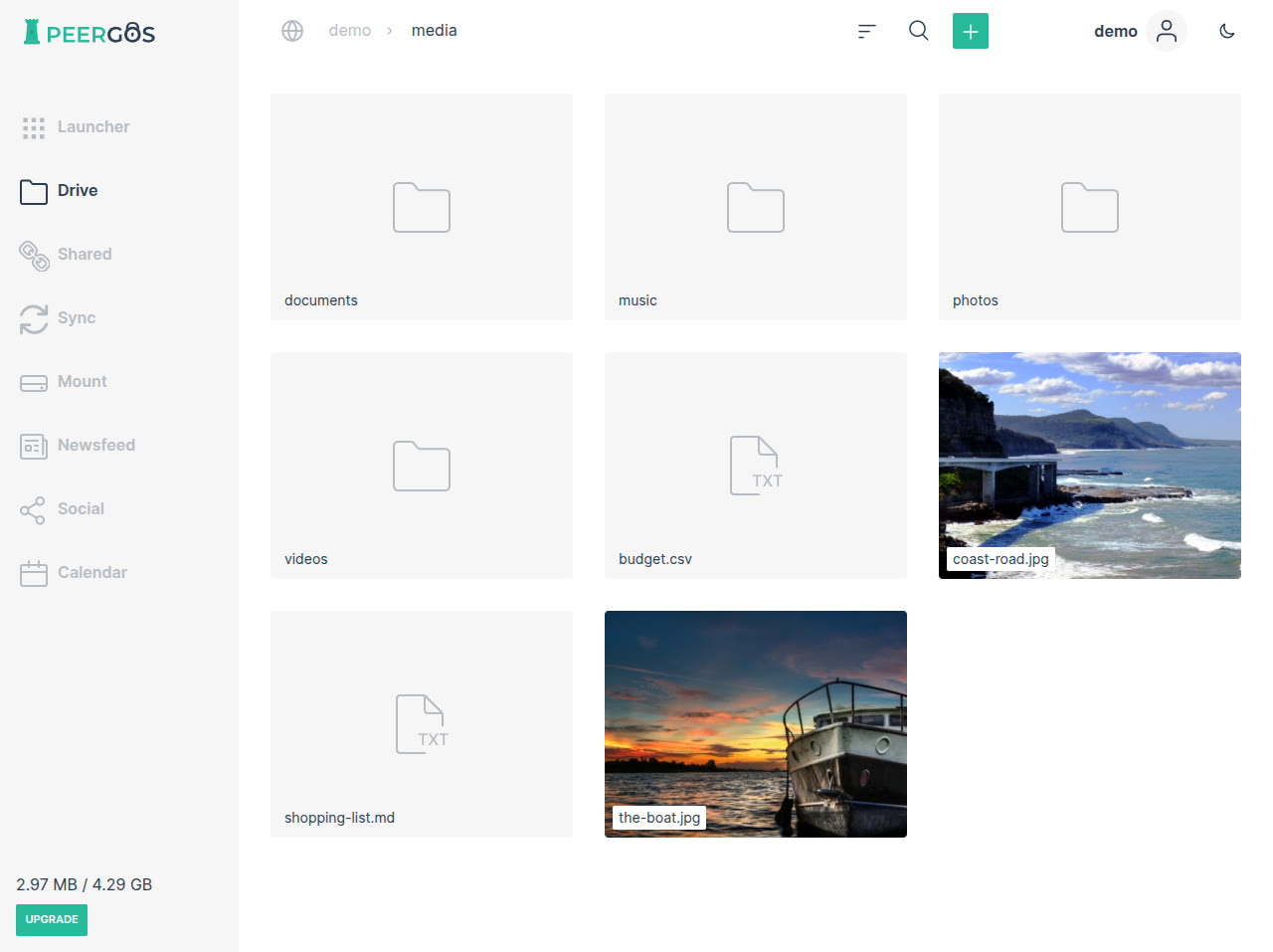
Sync a folder
Almost any folder can be synced, not just your photos. Point it at documents, a music library, a project you are working on, whatever you keep, and it stays in step with a folder in Peergos, on as many devices as you like, in both directions. Change one section of a large file and only the changed chunks are uploaded. Pause and resume it, watch the status of each pair, download a log when something looks wrong, and tell it to leave your mobile data alone. Turn deletion propagation off and sync becomes a backup. More about sync.
Mount it as a drive
On Windows, Linux and Android your Peergos drive can appear in the file manager as an ordinary drive, decrypting on demand as you open files. It takes a second factor to mount, and it can be mounted for one session only. Not yet on macOS. More about mounting.
WebDAV, CalDAV and CardDAV
The desktop app can also speak WebDAV, so tools like rclone work against your drive, and CalDAV and CardDAV, so Thunderbird and friends can read your calendar, your tasks and your contacts. Also not yet on macOS. On Android there is nothing to set up: your calendars and contacts sync into the phone's own calendar and contacts apps, both ways. More about the WebDAV bridge.
Files of any size
There is no maximum file size beyond the total space in your account, which as far as we know is a higher ceiling than any other provider's. Video streams from the middle without downloading the start, and a small edit to a huge file rewrites only the part that changed, encryption and all.
Zip archives, opened in place
Look inside a zip without downloading and unpacking it, and add, rename or delete entries where they sit. Dropping a folder in adds everything in it in one write.
Search
Full text search over your files, run on your device, because the server has nothing to search.
Offline
Log in and read recently used files with no network at all, and nothing is left unencrypted on disk for whoever finds the laptop.
Apps
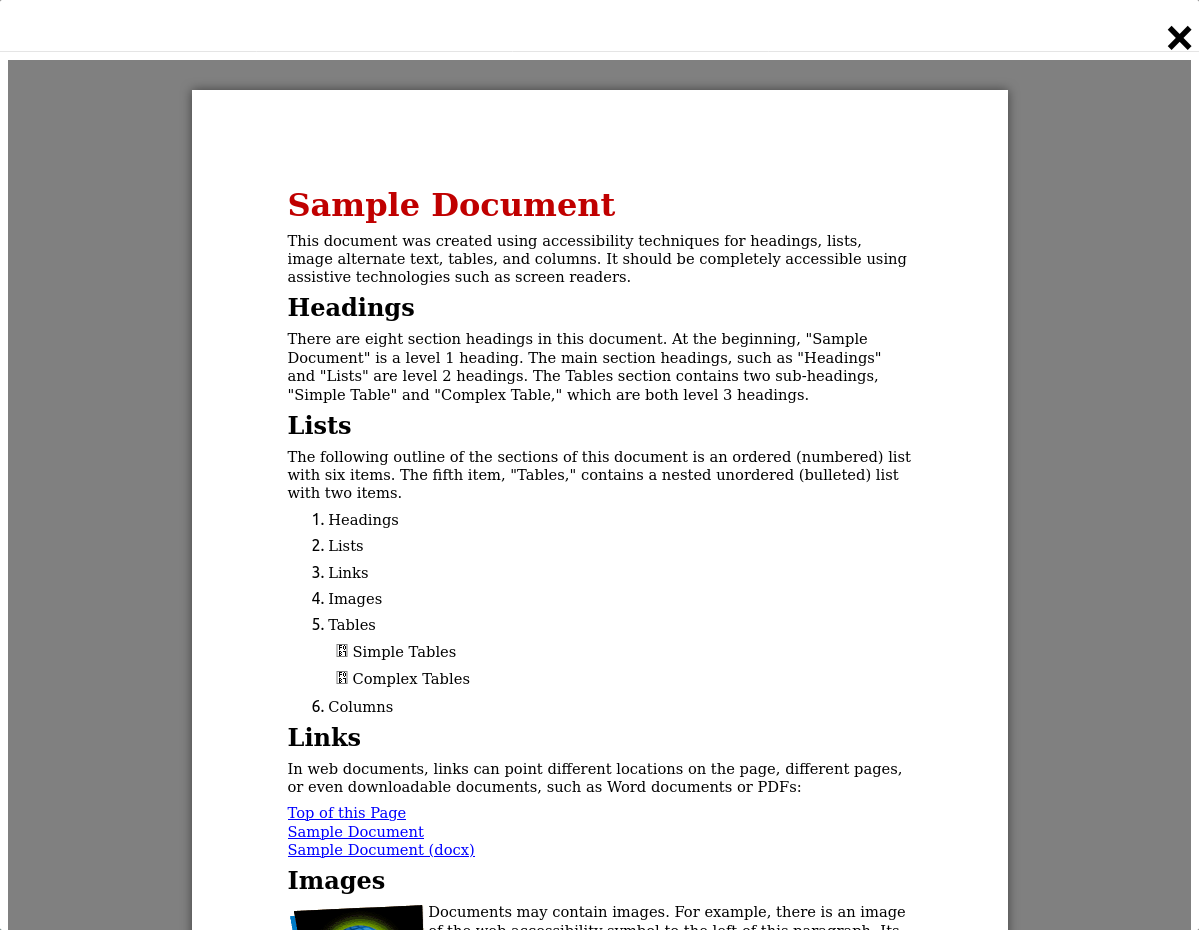
A calendar, a document editor, a spreadsheet, and more
Peergos ships a calendar, a document editor, a spreadsheet editor, a PDF viewer that also edits, a media player, an image gallery, a task board, a markdown browser and a wiki. They are ordinary web apps, and none of them contains any encryption or sharing code, because the layer underneath handles that. The full list.
Sandboxed, and asking permission
An app runs in a strong sandbox and sees only the file you opened with it. It cannot phone home, and it cannot read the rest of your drive. Write your own and it gets the same deal.
Sharing and people
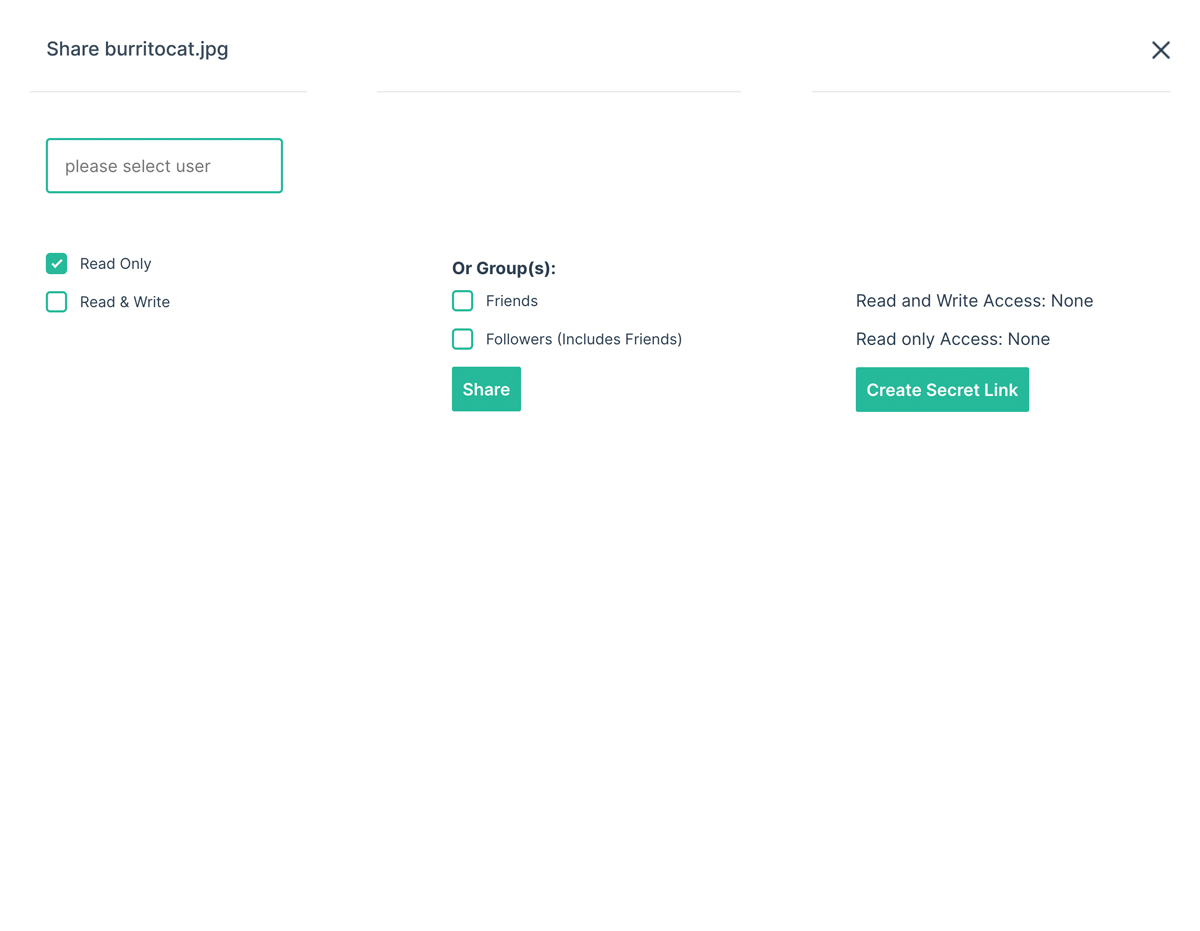
Share with people you know
Send an encrypted follow request to another Peergos user. They can accept, accept and reciprocate, or decline. Who follows whom is not visible to us or to the network, so your social graph stays yours.
Or send a secret link
Generate a link to a file or a folder and send it to someone who has never heard of Peergos. Only someone with the link can open it, and the file is still not exposed to the server or the network on the way. Links can expire, carry a password, work a fixed number of times, or allow writing back. More about secret links.
A social network with no advertisers in it
Posts, a feed and a profile, shared with the people you choose, on top of the same encrypted storage as everything else.
Yours to run
Your identity is not our property
Your identity is not tied to a server. Move to another one and keep your friends, your files and your links. Compare that with email, where changing host means telling everyone your new address. Peergos works it out for you and nobody has to be told.
Move house, or keep a spare
You can migrate to a different server on your own initiative, run a live mirror of everything you have, and pull your account away from a home server that has stopped answering.
Log in anywhere
Your password and any second factor get you in on any device. Files are fetched and decrypted as you use them, and once you log out a compromised device cannot read any of it.
Self-host, and still talk to everyone
Run the server yourself, for nothing, on your own hardware, and still friend and share with people on any other server. It is the same software we run, and all of it, server included, is open source.
Peer to peer underneath
Peergos is built on libp2p. Your files live wherever you choose to keep them, and every server can reach every other one.